



About Us
ron

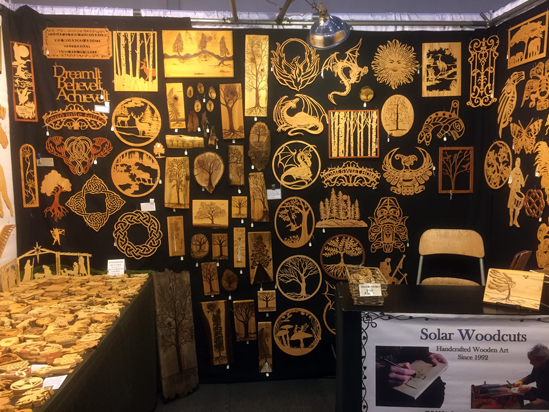
Ron Tremback and Patti Robertson have designed and created fretwork full time since 1992. They are unique in Canada in that they make a living with their craft.  As well as making the more traditional fretwork subjects such as, wildlife and silhouettes, they are well known for their more esoteric subjects, such as, celtic designs and ancient symbolism.

Ron sets up, saws, and contributes to the design process.  He has been an artisan for more than 35 years, making everything from moccasins to houses and cabins.  His love of fine detail and intricate designs led him to become a professional fretwork artist 20 years ago.

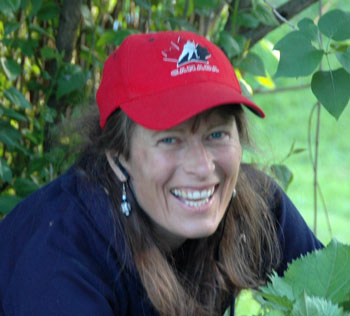
Patti draws the patterns, creating an eclectic mix of images to produce their 450 current designs.  She also assembles and finishes the fretwork items. Patti has more than 30 years experience as an artisan creating many different kinds of arts and crafts.  She has experience in weaving and knitting and has formal training in upholstery.  She has also done papermaking and beeswax candle making, and has given workshops in these art forms.

They have now exhibited at more than 340 shows during their 19 years of creating fretwork.

Often people ask Ron and Patti if they use a laser machine or some other computer controlled device to produce their fretwork.  The answer to this is a definite “no” as they produce their creations using techniques similar to those that have been used for centuries.

How Fretwork is Created

Fretwork involves the intricate sawing of wood with many inside cutouts.  The first stage of the process is creating the design.  In the design process, Patti not only needs to produce inspiring designs, but they must be structurally sound and still be one piece of wood at the end of the process.        
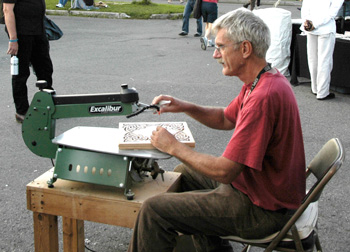
Ron uses special laminated hardwoods to provide structural integrity to Patti’s intricate designs.  After selection, Ron sands the wood by hand.  He then glues the paper design to the wood with non-permanent glue.  Next he drills holes in the areas to be cut out to provide entry points for the saw blade.  The next stage is the sawing of the wood with a scroll saw.  Ron uses many different sizes and varieties of blades depending on the thickness and species of wood and the amount of fine detail in the pattern. 
The blade is threaded through an entry hole, the piece is cut out, the blade is disconnected, and the process is repeated until the piece is finished.  They then give the project a final sanding by hand and clean up the cuts with needle files and small sandpaper strips.  The final stage of the process is dipping each piece into a combination of linseed oil and citrus thinner both to bring out the natural beauty of the wood and to protect the piece.

Ron and Patti have two standards for choosing the materials and finishes that go into their creations:  all finishes must be non-toxic and all materials and finishes, wherever possible, are Canadian in origin.

They are very conscious of the health of the people who live with our creations and of their own health.  They are also concerned about depletion of the world’s forests. They choose our ingredients with these principles in mind.

They have no employees in their operation and spend most of their time making and selling their craft.  Their craft business is their main source of income.  Ron and Patti treats their business as a very serious endeavor with quality and customer service their main considerations.  They continue to explore new designs and techniques.

Demonstrations

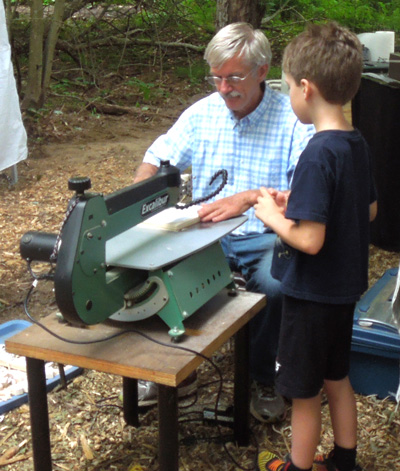
Ron demonstrates at all outdoor shows they attend.  He powers his scroll saw with a gel cell battery.  He spends at least 80% of the time at the shows working on the saw.  People come away with a new appreciation for their creations after they have seen them being made.  Children often spend hours watching Ron’s wizardry on his saw.  Appreciative young people sometimes ask him for his autograph!

patti